

THE LIQUID BIOPSY TEST
Built for
HPV+ Cancer.
What Is HPV and
How Does It Cause Cancer?
Human papillomaviruses (HPVs) are a group of viruses that infect the outer and inner surfaces of the human body and can cause a number of health problems.18,19 Some types of HPV infect the mouth and throat, as well as the genitals and anus, and are commonly spread by sexual contact.20
There are more than 200 types of HPV, each classified as low-risk or high-risk.19 Low-risk types may cause warts but rarely cause cancer. At least 13 types are considered high-risk because a chronic, long-term infection can cause cancer, including cancers of the cervix, vulva, vagina, penis, anus, and oropharynx (back of the throat, tonsils, and base of the tongue).21 The most common high-risk types are HPV-16 and HPV-18.22
HPV is now the most common sexually transmitted infection in the United States, and almost all sexually active adults will be infected with at least one strain of HPV at some point in their lifetime. In most cases, the immune system clears HPV just like any other infection. But if an infection with a high-risk strain persists for 10 years or more, the infected tissue can begin to show pre-malignant changes, which can advance to frank malignancy over time. With a chronic infection, the HPV virus can produce proteins within the infected tissue that cause the cells to become malignant.
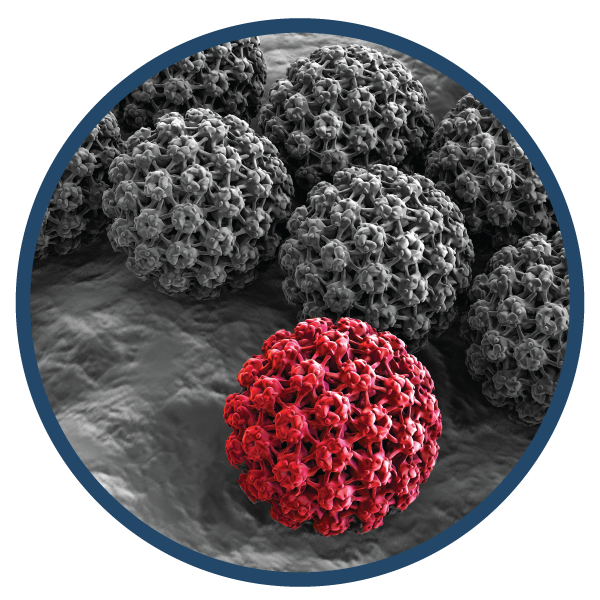
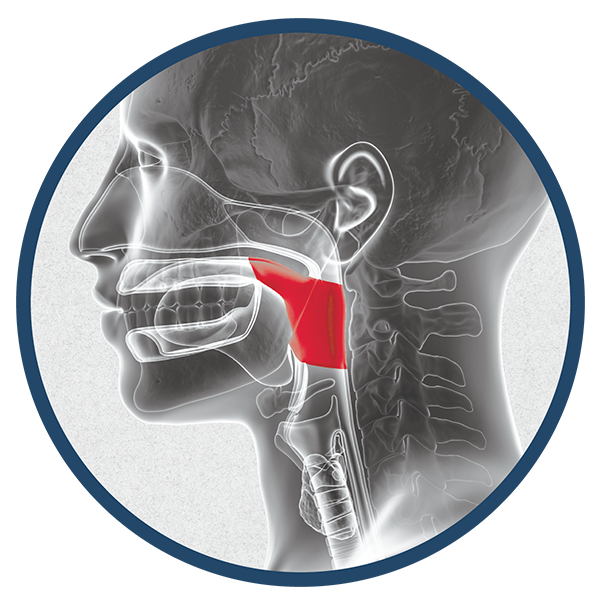
The rate of squamous cell carcinoma of the oropharynx (the back of the throat, tonsils, and base of the tongue) has been increasing in the United States.25 HPV-driven head & neck cancer now represents 60-70% of all head & neck cancer in the United States.25 The driver of this increase is a rise in chronic oral infections with high-risk HPV, especially HPV-16.25 Early symptoms of these cancers are often a new swelling in the neck or a sore throat that won’t resolve after a typical course of antibiotics.
HPV+ head & neck cancer tends to occur in younger people, often without the traditional risk factors of cigarette smoking and alcohol use.26 While the tumors in the oropharynx tend to be small, they commonly have significant lymph node involvement.26 Importantly, people diagnosed with HPV+ head & neck cancer generally have a better prognosis and respond better to treatment than those with tobacco-related, HPV-negative disease.
Tumors of the oropharynx and treatment itself can affect many everyday activities, including chewing, swallowing, breathing, speaking, and sensation, and may also affect appearance.27 The physical and emotional burden of treatment is significant. While the majority of patients do well after initial treatment, 15-25% of HPV+ head & neck cancer patients may experience a recurrence within five years.12,28,29,30 Thirty-three to 52% of first recurrences involve distant metastases located in other parts of the body, especially in the lungs.30,31 For these reasons, survivors of this cancer have demonstrated high rates of psychological distress and reduced quality of life. Fear of recurrence is the number one concern after treatment ends.17
While physical exam, nasopharyngeal endoscopy, and imaging play an important role in monitoring for recurrence, they have clear limitations. These tools may not detect cancer outside the regions being examined, and inconclusive imaging results are common. A blood test using a specific HPV-driven cancer biomarker can provide more accurate, more reliable, and potentially earlier detection of recurrence, wherever it may be located in the body. When recurrences are found early and there are few metastatic deposits, they can be treated with surgical excision or focused radiotherapy, allowing the patient to avoid additional courses of combined chemoradiation therapy.

HPV+ Anal Squamous Cell Carcinoma
Squamous cell carcinoma of the anus (ASCC) is another cancer driven primarily by HPV, with HPV-16 responsible for the majority of cases.32 Like HPV+ head & neck cancer, rates of anal cancer have been rising in the United States for decades, and the disease is no longer rare.
ASCC is treated primarily with concurrent chemotherapy and radiation. Many patients respond well to treatment, but recurrence remains a real risk: up to 30% of patients may experience a recurrence after completing therapy.33 Fear of recurrence is a central concern in survivorship, and the consequences of a missed or delayed recurrence can be serious.
Post-treatment surveillance for anal cancer presents unique challenges. Standard approaches include physical exams, imaging, and anoscopy. High-resolution anoscopy (HRA) is among the most sensitive methods for examining the anal canal, but access to HRA specialists is severely limited across most of the United States.34,35,36 Many patients complete treatment at a major cancer center and return home to a community where HRA is simply not available, creating a meaningful gap in their follow-up care.
The psychological burden of survivorship is significant in this population as well. In addition to fear of recurrence, anal cancer patients may face unique challenges related to the nature of the diagnosis and the physical effects of treatment on bowel, bladder, and sexual function.
P R O V I D E R S
Know earlier. Act sooner.
Use cases, the full NavDx evidence base, and ordering information.
P A T I E N T S
Know more. Worry less.
Patient-friendly education and resources to support your journey.
References
12. Surveillance Research Program, National Cancer Institute. SEER*Explorer: An interactive website for SEER cancer statistics [Internet]. 2024.
17. Elaldi R, Roussel L-M, Gal J, et al. Correlations between long-term quality of life and patient needs and concerns following head and neck cancer treatment and the impact of psychological distress. A multicentric cross-sectional study. Eur Arch Otorhinolaryngol. 2021. http://doi.org/10.1007/s00405-020-06326-8.
18. HPV infection. Mayo Clinic. Updated September 2025. https://www.mayoclinic.org/diseases-conditions/hpv-infection/symptoms-causes/syc-20351596.
19. Chen Z, Schiffman M, Herrero R, et al. Classification and evolution of human papillomavirus genome variants: Alpha-5 (HPV26, 51, 69, 82), Alpha-6 (HPV30, 53, 56, 66), Alpha-11 (HPV34, 73), Alpha-13 (HPV54) and Alpha-3 (HPV61). Virology. 2018. http://doi.org/10.1016/j.virol.2018.01.002.
20. Division of STD Prevention, CDC. Genital HPV infection fact sheet. https://www.cdc.gov/sti/about/about-genital-hpv-infection.html.
21. Human papillomaviruses. IARC Monographs. 2012;100B:255-313.
22. American Cancer Society. HPV and cancer. Updated March 2026. https://www.cancer.org/cancer/cancer-causes/infectious-agents/hpv/hpv-and-cancer-info.html.
25. Chaturvedi AK, et al. Worldwide trends in incidence rates for oral cavity and oropharyngeal cancers. J Clin Oncol. 2013. http://doi.org/10.1200/JCO.2013.50.3870.
26. Kostareli E, Holzinger D, and Hess J. New concepts for translational head and neck oncology: Lessons from HPV-related oropharyngeal squamous cell carcinomas. Front Oncol. 2012. http://doi.org/10.3389/fonc.2012.00036.
27. Cancer Research UK. Changes in your appearance due to mouth and oropharyngeal cancer. Updated September 2024. https://www.cancerresearchuk.org/about-cancer/mouth-cancer/living-with/changes-your-appearance
28. Fakhry C, Westra WH, Li S, et al. Improved survival of patients with human papillomavirus–positive head and neck squamous cell carcinoma in a prospective clinical trial. JNCI: Journal of the National Cancer Institute. 2008. https://doi.org/10.1093/jnci/djn011.
29. Ang KK, Harris J, Wheeler R, et al. Human papillomavirus and survival of patients with oropharyngeal cancer. N Engl J Med. 2010. https://doi.org/10.1056/NEJMoa0912217.
30. Gillison ML, Trotti AM, Harris J, et al. Radiotherapy plus cetuximab or cisplatin in human papillomavirus-positive oropharyngeal cancer (NRG Oncology RTOG 1016): a randomised, multicentre, non-inferiority trial. Lancet. 2019. https://doi.org/10.1016/S0140-6736(18)32779-X.
32. Alemany L, Saunier M, Alvarado-Cabrero I, et al. Human papillomavirus DNA prevalence and type distribution in anal carcinomas worldwide. Int J Cancer. 2015. http://doi.org/10.1002/ijc.28963.
33. Eng C, et al. The management and prevention of anal squamous cell carcinoma. Am Soc Clin Oncol Educ Book. 2019. http://doi.org/10.1200/EDBK_237433.