
A pre-treatment test is not required to use the NavDx test at other points in the care journey. Monitoring with the NavDx test can be started at any time.

FOR HEALTHCARE PROVIDERS TREATING HPV+ CANCER
Know Earlier.
Act Sooner.

A Note to Providers.
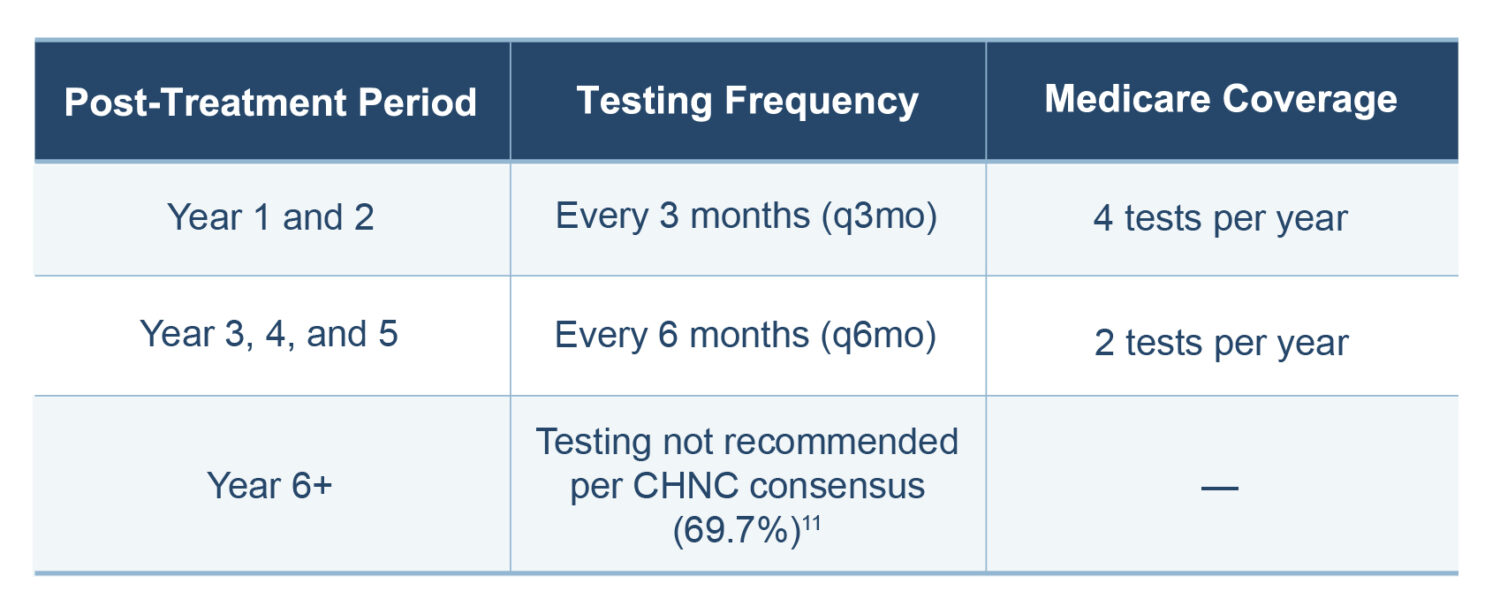
The following guidance is informed by the consensus recommendations of the California Head and Neck Consortium (CHNC), published in the Journal of Clinical Oncology Oncology Practice (JCO OP) in December 2025. The panel comprised 33 experts across 15 institutions using a hybrid Delphi methodology. Consensus levels are noted where relevant.11
When to Begin NavDx® Testing.
A pre-treatment baseline TTMV Score is not required to begin NavDx testing during surveillance, but obtaining one is recommended when possible. A confirmed pre-treatment test supports more meaningful interpretation of post-treatment results and may help identify patients whose disease did not respond fully to treatment. (81.8% consensus, CHNC 2025) 11
Expert consensus supports beginning NavDx testing for surveillance monitoring at 3 months post-treatment (usually the first scheduled surveillance visit after completion of definitive therapy). (84.8% consensus, CHNC 2025) 11
Points to Remember:
NavDx testing can begin at any point in the patient’s care journey.
The absence of a baseline NavDx result does not preclude the clinical value of serial post-treatment testing or testing during treatment. The positive predictive value of the NavDx test in surveillance is independent of a baseline test value. Consistent negative results during surveillance after a positive test at any point in the journey, or consistently declining positive results during treatment, provide meaningful reassurance regardless of whether a baseline was established.
NavDx testing supplements, but does not replace, standard clinical surveillance.
Physical exam, nasopharyngeal endoscopy, and imaging remain part of appropriate HPV-driven OPSCC care. NavDx testing adds a layer of objective, molecular information that these tools cannot provide on their own, while the other tools provide insight into patient healing, function, and when needed, localization of disease recurrence indicated by a positive NavDx test.
The NavDx test can be ordered and performed any time prior to initial biopsy or resection or the initiation of CRT or immunotherapy.
Recommended Testing Cadence.
The CHNC recommendations aligning NavDx testing with routine surveillance visits (87.9% consensus).11 Medicare covers NavDx testing for OPSCC surveillance at the following intervals:
Interpreting Results and Clinical Decision Support.
The NavDx test report provides a TTMV-HPV DNA status (detected / not detected) and a quantitative TTMV Score. The following framework provides guidance for clinical decision-making based on test results.
When the Result Is Negative
(TTMV-HPV DNA Not Detected)
A negative TTMV Score is associated with an NPV of ≥98% in OPSCC surveillance populations.2 That means the vast majority of patients with a negative result have no detectable molecular evidence of disease at the time of testing. Consistently negative results over time are associated with significantly better recurrence-free and overall survival.
- Continue routine surveillance at the recommended cadence
- A negative result does not eliminate the need for regular surveillance visits, clinical exam, nasopharyngeal endoscopy, and imaging
When the Result Is Positive
(TTMV-HPV DNA Detected)
A positive TTMV Score has a PPV of ≥95% in OPSCC surveillance populations.2,3 That means a positive result is strongly associated with recurrent disease. In many cases, NavDx testing may detect recurrence before it is visible on imaging or produces symptoms. The CHNC has established a clear workflow for managing a positive result in the absence of clinical evidence of disease:
- Accelerate clinical exam and imaging. Do not wait for the next scheduled surveillance visit. Order appropriate imaging (CT or PET/CT depending on clinical context). (81.8% consensus, CHNC 2025)11
- If imaging is negative, retest in 1 month. A single positive result necessitates close follow-up. If no clinical evidence of disease is found, the expert-endorsed next step is a repeat NavDx test in 1 month. (90.9% agreement).11
- If the NavDx test is positive again at 1 month and there is still no clinical evidence of disease, intensify imaging surveillance and expand the field of view. Persistent TTMV positivity is clinically meaningful. More aggressive imaging (e.g., PET/CT, if CT was first-line) is appropriate and expert-endorsed. (93.9% consensus). 11
When the Result Is Indeterminate
(TTMV-HPV DNA Status Unconfirmed)
Indeterminate NavDx results occur in fewer than 1.5% of tests in real-world daily practice.10 An indeterminate result should not be interpreted as positive or negative. However, it should be taken seriously: Indeterminate findings have been associated with a high rate of conversion. Approximately 50% convert to positive on the subsequent test, often accompanied by clinical evidence of active disease.10
- Repeat testing in 4–6 weeks
- Continue routine clinical surveillance in the interim
Managing Patient Expectations Around a Positive Result.
The CHNC consensus notes that a positive ctHPVDNA result without clinical or radiographic evidence of disease can increase patient distress (81.8% consensus). Proactive communication about what a positive result means and what the next steps are can help patients manage anxiety while appropriate follow-up is completed. See Implementing NavDx in the Clinic for patient communication guidance.
NavDx at Each Stage of Care.
NavDx testing can be used across the full care continuum. Select a use case below for detailed clinical guidance.

A Note to Providers.
Formal expert consensus guidelines for NavDx® use in ASCC surveillance have not yet been published. The guidance below reflects Medicare coverage policy, published clinical evidence, and best practices from the treating community. As the ASCC evidence base continues to grow, this guidance will be updated to reflect emerging recommendations.
When to Begin NavDx Testing.
A pre-treatment baseline TTMV Score is not required to begin testing during treatment or during surveillance, but obtaining one is recommended when feasible. In the foundational ASCC validation study, NavDx detected TTMV-HPV DNA in 85% of patients at their pre-treatment draw, confirming that a reliable baseline is achievable for most ASCC patients.4
Critically for ASCC, post-chemoradiotherapy (CRT) imaging is typically delayed until approximately 26 weeks post-treatment due to treatment-related inflammation, fibrosis, and tissue changes that make earlier imaging unreliable. NavDx testing can provide molecular surveillance during this window, offering the only objective disease-status information available in the months immediately following treatment completion. Serial testing can provide insight into whether the tumor is regressing, stable, or progressing during this 6-month window.
Points to Remember:
NavDx testing can begin at any point in the patient’s care journey.
The absence of a baseline NavDx result does not preclude the clinical value of serial post-treatment testing or testing during treatment. The positive predictive value of the NavDx test in surveillance is independent of a baseline test value. Consistent negative results during surveillance after a positive test at any point in the journey, or consistently declining positive results during treatment, provide meaningful reassurance regardless of whether a baseline was established.
NavDx testing supplements, but does not replace, standard clinical surveillance.
Digital anorectal exam (DARE), anoscopy, and imaging remain part of appropriate HPV-driven ASCC care. NavDx testing adds a layer of objective, molecular information that these tools cannot provide on their own.
If you choose to order the NavDx test pre-treatment, it can be done anytime prior to the initiation of treatment.
Because anal cancer primaries may be small, the NavDx test is best performed before biopsy, as the lesion may be removed by biopsy, potentially causing a false negative result. For patients with larger lesions, NavDx testing 2-3 days after biopsy procedure will provide the most accurate pre-treatment ctHPVDNA level, allowing for clearance of procedure-related ctHPVDNA.
Recommended Testing Cadence.
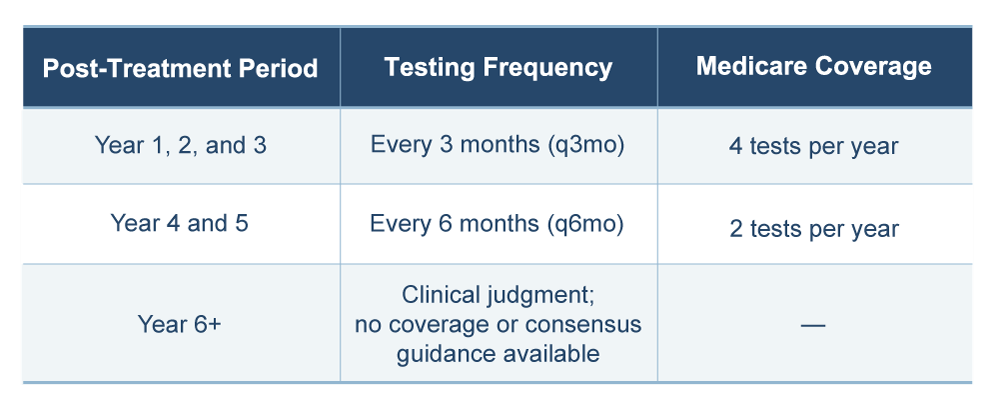
In the absence of published consensus guidelines for ASCC, the Medicare coverage cadence provides the practical clinical benchmark for NavDx testing frequency in ASCC surveillance:
Interpreting Results and Clinical Decision Support.
The NavDx test report provides a TTMV-HPV DNA status (detected / not detected) and a quantitative TTMV Score. The following framework provides guidance for clinical decision-making based on test results.
When the Result Is Negative
(TTMV-HPV DNA Not Detected)
In the ASCC validation study, NavDx testing had a per-patient NPV of 92.5%.4 Patients with consistently negative post-treatment NavDx results had significantly better recurrence-free survival than those who tested positive at any point.4
- Continue routine surveillance at the recommended cadence
- A negative result does not eliminate the need for clinical exam, DARE, or imaging per NCCN guidelines
When the Result Is Positive
(TTMV-HPV DNA Detected)
The per-patient PPV of NavDx testing in ASCC surveillance populations is 96.0%.4 A positive result in an asymptomatic patient warrants prompt follow-up.
- Accelerate clinical exam and imaging; retest in 1 month if imaging shows no evidence of disease
- If follow-up NavDx testing is positive, consider escalating imaging (e.g., PET/CT if initial imaging used CT only). Coordinate with your multidisciplinary team as appropriate.
When the Result Is Indeterminate
(TTMV-HPV DNA Status Unconfirmed)
The NavDx indeterminate rate in ASCC post-treatment testing is approximately 1.9% in published research4 and fewer than 1.5% in real-world daily practice.10 An indeterminate result should not be interpreted as positive or negative. However, it should be taken seriously: Across both OPSCC and ASCC, NavDx indeterminate findings have been associated with a high rate of conversion. Approximately 50% convert to positive on the subsequent test, often accompanied by clinical evidence of active disease.10
- Repeat testing in 4–6 weeks
- Continue routine clinical surveillance in the interim.
Managing Patient Expectations Around a Positive Result.
A positive NavDx result without clinical or radiographic evidence of disease can increase patient anxiety. Proactive communication about what a positive result means and what the next steps are can help patients manage anxiety while appropriate follow-up is completed. See Implementing NavDx in the Clinic for patient communication guidance.
NavDx at Each Stage of Care.
NavDx testing can be used across the full care continuum in ASCC. Select a use case below for detailed clinical guidance.
A pre-treatment test is not required to use the NavDx test at other points in the care journey. Monitoring with the NavDx test can be started at any time.
References
- Ferrandino RN, Chen S, Kappauf C, et al. Performance of liquid biopsy for diagnosis and surveillance of human papillomavirus–associated oropharyngeal cancer. JAMA Otolaryngol Head Neck Surg. 2023. http://doi.org/10.1001/jamaoto.2023.1937.
- Hanna GJ, Roof SA, Jabalee J, et al. Negative predictive value of circulating tumor tissue modified viral (TTMV)-HPV DNA for HPV-driven oropharyngeal cancer surveillance. Clin Cancer Res. 2023. http://doi.org/10.1158/1078-0432.CCR-23-1478.
- Berger BM, Hanna GJ, et al. Detection of occult recurrence using circulating tumor tissue modified viral HPV DNA among patients treated for HPV-driven oropharyngeal carcinoma. Clin Cancer Res. 2022. http://doi.org/10.1158/1078-0432.CCR-22-0562.
- Kabarriti R, Lloyd S, Jabalee J, et al. Evaluating tumor tissue modified viral (TTMV)-HPV DNA for the early detection of anal squamous cell carcinoma recurrence. Cancers. 2025. http://doi.org/10.3390/cancers17020174.
- Kabarriti R, Lloyd S, Jabalee J, et al. Resolving clinically indeterminate findings during anal cancer surveillance with TTMV-HPV DNA. Cancers. 2026. http://doi.org/10.3390/cancers18010035.
- Chera BS, Kumar S, Shen C, et al. Plasma circulating tumor HPV DNA for the surveillance of cancer recurrence in HPV-associated oropharyngeal cancer. J Clin Oncol. 2020. http://doi.org/10.1200/JCO.19.02444.
- Chera BS, Kumar S, Beaty BT, et al. Rapid clearance profile of plasma circulating tumor HPV type 16 DNA during chemoradiotherapy correlates with disease control in HPV-associated oropharyngeal cancer. Clin Cancer Res. 2019. https://doi.org/10.1158/1078-0432.CCR-19-0211.
- Rettig EM, Schoenfeld JD, Miller J, et al. A prospective trial of biomarker-guided surveillance for HPV-positive oropharynx cancer using plasma tumor tissue–modified viral HPV DNA. Clinical Cancer Research. 2025. http://doi.org/10.1158/1078-0432.CCR-24-3053.
- Mijares K, Ferrandino R, Chai R, et al. Circulating tumor HPV DNA in patients with head and neck carcinoma: Correlation with HPV genotyping. Am J Surg Pathol. 2024. http://doi.org/10.1097/PAS.0000000000002134.
- Naveris data on file.
- Ho AS, Moyers JT, et al. Evolving use of circulating tumor DNA for HPV+ oropharyngeal carcinoma: Consensus recommendations from the California Head and Neck Consortium. JCO Oncol Pract. 2025. http://doi.org/10.1200/OP-25-00450.
- Surveillance Research Program, National Cancer Institute. SEER*Explorer: An interactive website for SEER cancer statistics [Internet]. 2024.
- Kim JK, Tam M, et al. A phase 2 exploratory trial evaluating computed tomography-based midtreatment nodal response to select for de-escalated chemoradiation therapy in the definitive management of p16+ oropharyngeal cancer. Int J Radiat Oncol Biol Phys. 2026. http://doi.org/10.1016/j.ijrobp.2025.09.054.
- Ferrandino RM, Barlow J, Gold B, et al. Diagnostic accuracy of circulating tumor HPV DNA testing in patients with a lateral neck mass. JAMA Otolaryngol Head Neck Surg.2024. http://doi.org/10.1001/jamaoto.2024.2702.
- Papazian MR, Hicks MD, Mannion K, Turner M, and Topf MC. Diagnostic accuracy of HPV circulating tumor DNA following non-diagnostic FNA of a cystic lateral neck mass. Head Neck. 2026. http://doi.org/10.1002/hed.70060.
- Lambert T, Tasoulas J, Flores M, Sheth S, and Patel S. Circulating tumor HPV DNA as an alternative method to determine HPV status in oropharyngeal squamous cell carcinoma. Oral Oncol. 2023. http://doi.org/10.1016/j.oraloncology.2023.106361.
- Elaldi R, Roussel L-M, Gal J, et al. Correlations between long-term quality of life and patient needs and concerns following head and neck cancer treatment and the impact of psychological distress. A multicentric cross-sectional study. Eur Arch Otorhinolaryngol. 2021. http://doi.org/10.1007/s00405-020-06326-8.
- HPV infection. Mayo Clinic. Updated September 2025. https://www.mayoclinic.org/diseases-conditions/hpv-infection/symptoms-causes/syc-20351596.
- Chen Z, Schiffman M, Herrero R, et al. Classification and evolution of human papillomavirus genome variants: Alpha-5 (HPV26, 51, 69, 82), Alpha-6 (HPV30, 53, 56, 66), Alpha-11 (HPV34, 73), Alpha-13 (HPV54) and Alpha-3 (HPV61). Virology. 2018. http://doi.org/10.1016/j.virol.2018.01.002.
- Division of STD Prevention, CDC. Genital HPV infection fact sheet. https://www.cdc.gov/sti/about/about-genital-hpv-infection.html.
- Human papillomaviruses. IARC Monographs. 2012;100B:255-313.
- American Cancer Society. HPV and cancer. Updated March 2026. https://www.cancer.org/cancer/cancer-causes/infectious-agents/hpv/hpv-and-cancer-info.html.
- Martin, L. Oral HPV and cancer. WebMD. Updated February 2026. https://www.webmd.com/oral-health/guide/oral-hpv-cancer.
- American Cancer Society. Pap Test (Pap Smear). Updated December 2025. https://www.cancer.org/cancer/cervical-cancer/detection-diagnosis-staging/screening-tests/pap-test.html
- Chaturvedi AK, et al. Worldwide trends in incidence rates for oral cavity and oropharyngeal cancers. J Clin Oncol. 2013. http://doi.org/10.1200/JCO.2013.50.3870.
- Kostareli E, Holzinger D, and Hess J. New concepts for translational head and neck oncology: Lessons from HPV-related oropharyngeal squamous cell carcinomas. Front Oncol. 2012. http://doi.org/10.3389/fonc.2012.00036.
- Cancer Research UK. Changes in your appearance due to mouth and oropharyngeal cancer. Updated September 2024. https://www.cancerresearchuk.org/about-cancer/mouth-cancer/living-with/changes-your-appearance
- Fakhry C, Westra WH, Li S, et al. Improved survival of patients with human papillomavirus–positive head and neck squamous cell carcinoma in a prospective clinical trial. JNCI: Journal of the National Cancer Institute. 2008. https://doi.org/10.1093/jnci/djn011.
- Ang KK, Harris J, Wheeler R, et al. Human papillomavirus and survival of patients with oropharyngeal cancer. N Engl J Med. 2010. https://doi.org/10.1056/NEJMoa0912217.
- Gillison ML, Trotti AM, Harris J, et al. Radiotherapy plus cetuximab or cisplatin in human papillomavirus-positive oropharyngeal cancer (NRG Oncology RTOG 1016): a randomised, multicentre, non-inferiority trial. Lancet. 2019. https://doi.org/10.1016/S0140-6736(18)32779-X.
- Fakhry C et al. Human papillomavirus and overall survival after progression of oropharyngeal squamous cell carcinoma. J Clin Oncol. 2014. https://doi.org/10.1200/JCO.2014.55.1937
- Alemany L, Saunier M, Alvarado-Cabrero I, et al. Human papillomavirus DNA prevalence and type distribution in anal carcinomas worldwide. Int J Cancer. 2015. http://doi.org/10.1002/ijc.28963.
- Eng C, et al. The management and prevention of anal squamous cell carcinoma. Am Soc Clin Oncol Educ Book. 2019. http://doi.org/10.1200/EDBK_237433.
- Barnell GM, Schechter MS. Anal cancer screening and prevention—A new era, limited by access to high-resolution anoscopy. JAMA Netw Open. 2024. http://doi.org/10.1001/jamanetworkopen.2024.0019.
- Rim SH, Saraiya M, Beer L, Tie Y, Yuan X, Weiser J. Access to high-resolution anoscopy among persons with HIV and abnormal anal cytology results. JAMA Netw Open. 2024. http://doi.org/10.1001/jamanetworkopen.2024.0068.
- Rim SH, Beer L, Saraiya M, Tie Y, Yuan X, and Weiser J. Prevalence of anal cytology screening among persons with HIV and lack of access to high-resolution anoscopy at HIV care facilities. J Natl Cancer Inst. 2024. http://doi.org/10.1093/jnci/djae094.
- Ghodraty Jabloo V, Alibhai SMH, Fitch M, Tourangeau AE, Ayala AP, and Puts M. Antecedents and outcomes of uncertainty in older adults with cancer: A scoping review of the literature. Oncol Nurs Forum. 2017. http://doi.org/10.1188/17.ONF.E152-E167.
- Bergerot CD, et al. Fear of cancer recurrence or progression: What is it and what can we do about it? Am Soc Clin Oncol Educ Book. 2022. http://doi.org/10.1200/EDBK_100031.
- Roof SA, Jabalee J, Rettig EM, Chennareddy S, Ferrandino RM, Chen S, Posner MR, Genden EM, Chai RL, Sims J, Thrash E, Stern SJ, Kalman NS, Yarlagadda S, Raben A, Clements L, Mendelsohn A, Kaczmar JM, Pandey Y, Bhayani M, Del Vecchio Fitz C, Hanna GJ. Utility of TTMV-HPV DNA in resolving indeterminate findings during oropharyngeal cancer surveillance. Oral Oncol. 2024. http://doi.org/10.1016/j.oraloncology.2024.106874.
- Hollander A, Nonaka T. Cell-free HPV-DNA as a high-accuracy biomarker for treatment de-escalation in HPV-positive head and neck squamous cell carcinoma. Front Oncol. 2025. http://doi.org/10.3389/fonc.2025.1569877.
- Bastien AJ, Ng J, Cong I, Garcia J, Walgama ES, Luu M, Jang JK, Mita AC, Scher KS, Moyers JT, Mallen-St. Clair J, Maghami E, Chen MM, Zumsteg ZS, and Ho AS. Patient perceptions underlying ctDNA molecular surveillance for HPV(+) oropharyngeal squamous cell carcinoma. Oral Oncol. 2024. https://doi.org/10.1016/j.oraloncology.2024.106894.
- Lin MG, Zhu A, Read PW, Garneau J, and McLaughlin C. Novel HPV associated oropharyngeal squamous cell carcinoma surveillance DNA assay cost analysis. Laryngoscope. 2023. http://doi.org/10.1002/lary.30701.
- Gupta T, Master Z, Kannan S. et al. Diagnostic performance of post-treatment FDG PET or FDG PET/CT imaging in head and neck cancer: A systematic review and meta-analysis. Eur J Nucl Med Mol Imaging. 2011. http://doi.org/10.1007/s00259-011-1893-y.
- Lang Kuhs KA, Brenner JC, Holsinger FC, and Rettig EM. Circulating tumor HPV DNA for surveillance of HPV-positive oropharyngeal squamous cell carcinoma: A narrative review. JAMA Oncol. 2023. http://doi.org/10.1001/jamaoncol.2023.4042.
- Huffman BM, Singh H, Ali LR, Horick N, Wang SJ, Hoffman MT, et al. Biomarkers of pembrolizumab efficacy in advanced anal squamous cell carcinoma: analysis of a phase II clinical trial and a cohort of long-term responders. Journal for ImmunoTherapy of Cancer. 2024. http://doi.org/10.1136/jitc-2023-008436.
- Kais A, Santiago SP, Han PC, Clump DA, Stokes WA, Fancy T, Cui R, Martin E and Turner MT. Human papillomavirus circulating tumor DNA: a diagnostic tool in squamous cell carcinoma of unknown primary-a pilot study. Front Oncol. 2024. http://doi.org/10.3389/fonc.2024.1376595.
- Rettig EM, Wang AA, Tran N, et al. Association of pretreatment circulating tumor tissue-modified viral HPV DNA with clinicopathologic factors in HPV-positive oropharyngeal cancer. JAMA Otolaryngol Head Neck Surg. 2022. Article: http://doi.org/10.1001/jamaoto.2022.3282. Erratum: http://doi.org/10.1001/jamaoto.2022.4289.
- Ellsworth G, Shen R, Marcelin K-A, Majumdar R, Bazil M, Moore G, Nelson M, Alland I, Sepulveda G, Wilkin T, and Higginson D. High specificity of HPV cell-free DNA tests in persons with HIV for the detection of HPV-related cancer. J Acquir Immune Defic Syndr. 2023. http://doi.org/10.1097/QAI.0000000000003231.
- Routman DM, Kumar S, Chera BS, Jethwa KR, Van Abel KM, Frechette K, DeWees T, Golafshar M, Garcia JJ, Price DL, Kasperbauer JL, Patel SH, Neben-Wittich MA, Laack NL, Chintakuntlawar AV, Price KA, Liu MC, Foote RL, Moore EJ, Gupta GP, and Ma DJ. Detectable postoperative circulating tumor human papillomavirus DNA and association with recurrence in patients with HPV-associated oropharyngeal squamous cell carcinoma. Int J Radiat Oncol Biol Phys. 2022. http://doi.org/10.1016/j.ijrobp.2022.02.012.
- Huttinger ZM, Gogineni E, Baliga S, Blakaj DM, Bhateja P, Bonomi M, Kang SY, Old MO, Seim NB, VanKoevering KK, Agrawal A, Ozer E, Rocco JW, and Haring CT. Circulating tumor DNA determines induction chemotherapy response in HPV associated oropharyngeal squamous cell carcinoma: A pilot study. Oral Oncol. 2025. http://doi.org/10.1016/j.oraloncology.2025.107179.
- Frazer ML, Yang G, Felder S, McDonald J, Sanchez J, Dessureault S, Imanirad I, Carballido E, Kim R, Hoffe S, and Frakes J. Determining optimal follow-up for patients with anal cancer following chemoradiation. Am J Clin Oncol. 2020. http://doi.org/10.1097/COC.0000000000000673.
- Chung CH, Li J, Steuer CE, Bhateja P, Johnson M, Masannat J, Poole MI, Song F, Hernandez-Prera JC, Molina H, Wenig BM, Kumar S, Kuperwasser C, Stephens PJ, Farinhas JM, Shin DM, Kish JA, Muzaffar J, Kirtane K, Rocco JW, Schell MJ, Saba NF, and Bonomi M. Phase II multi-institutional clinical trial result of concurrent cetuximab and nivolumab in recurrent and/or metastatic head and neck squamous cell carcinoma. Clin Cancer Res. 2022. http://doi.org/10.1158/1078-0432.CCR-21-3849.
- Cabel L, Jeannot E, Bieche I, Vacher S, Callens C, Bazire L, Morel A, Bernard-Tessier A, Chemlali W, Schnitzler A, Lièvre A, Otz J, Minsat M, Vincent-Salomon A, Pierga J-Y, Buecher B, Mariani P, Proudhon C, Bidard F-C, and Cacheux W. Prognostic impact of residual HPV ctDNA detection after chemoradiotherapy for anal squamous cell carcinoma. Clin Cancer Res. 2018. http://doi.org/10.1158/1078-0432.CCR-18-0922.
- Bernard-Tessier A, Jeannot E, Guenat D, Debernardi A, Michel M, Proudhon C, Vincent-Salomon A, Bièche I, Pierga J-Y, Buecher B, Meurisse A, François E, Cohen R, Jary M, Vendrely V, Samalin E, El Hajbi F, Baba-Hamed N, Borg C, Bidard F-C, and Kim S. Clinical validity of HPV circulating tumor DNA in advanced anal carcinoma: An ancillary study to the epitopes-HPV02 trial. Clin Cancer Res. 2019. http://doi.org/10.1158/1078-0432.CCR-18-2984.
- Wong ET, Dmytriw AA, Yu E, et al. 18F-FDG PET/CT for locoregional surveillance following definitive treatment of head and neck cancer: A meta-analysis of reported studies. Head & Neck. 2019. https://doi.org/10.1002/hed.25513
- Masroor F, Corpman D, Carpenter DM, Ritterman Weintraub M, Cheung KHN, and Wang KH. Association of NCCN-recommended posttreatment surveillance with outcomes in patients with HPV-associated oropharyngeal squamous cell carcinoma. JAMA Otolaryngol. Neck Surg. 2019. https://doi.org/10.1001/jamaoto.2019.1934.
- Su W, Rajeev-Kumar G, Kang M, et al. Long-term outcomes in patients with recurrent human papillomavirus-positive oropharyngeal cancer after upfront transoral robotic surgery. Head & Neck. 2020. https://doi.org/10.1002/hed.26396
- Gimenez F, Costa-e-Silva IT, Daumas A, Araújo, Jd, Medeiros SG, and Ferreira, L. The value of high-resolution anoscopy in the diagnosis of anal cancer precursor lesions in HIV-positive patients. Arq. Gastroenterol. 2011. https://doi.org/10.1590/S0004-28032011000200010
- Brenes D, Kortum A, Carns J, Mutetwa T, Schwarz R, Liu Y, Sigel K, Richards-Kortum R, Anandasabapathy S, Gaisa M, and Chiao, E. Automated in vivo high-resolution imaging to detect human papillomavirus–associated anal precancer in persons living with HIV. Clinical and Translational Gastroenterology. 2023. http://doi.org/10.14309/ctg.0000000000000558
- Ang CW, Dawson R, Hall C, and Farmer M. The diagnostic value of digital rectal examination in primary care for palpable rectal tumour. Colorectal Disease. 2008. https://doi.org/10.1111/j.1463-1318.2007.01381.x
- Adusumilli P, Elsayed N, Theophanous S, Samuel R, Cooper R, Casanova N, Tolan DJ, Gilbert A, and Scarsbrook AF. Combined PET-CT and MRI for response evaluation in patients with squamous cell anal carcinoma treated with curative-intent chemoradiotherapy. Eur Radiol. 2022. http://doi.org/10.1007/s00330-022-08648-z.
- Eng C, Ciombor KK, Cho M, Dorth JA, Rajdev LN, Horowitz DP, Gollub MJ, Jácome AA, Lockney NA, Muldoon RL, Washington MK, O’Brian BA, Benny A, Lebeck Lee CM, Benson AB 3rd, Goodman KA, and Morris VK. Anal cancer: Emerging standards in a rare disease. Clin. Oncol. Off. J. Am. Soc. Clin. Oncol. 2022. http://doi.org/10.1200/JCO.21.02566.
- Littlejohn JB, and Brister KA. Management of Recurrent Anal Cancer. Oncol. Clin. 2025. https://pubmed.ncbi.nlm.nih.gov/39547772/
- Upadhyay L, Hartzell M, Parikh AR, Strickland MR, Klempner S, and Malla M. Recent advances in the management of anal cancer. Healthcare. 2023. https://doi.org/10.3390/healthcare11233010