

FOR PATIENTS & SURVIVORS WITH HPV+ CANCER
Know More.
Worry Less.
HPV+ Cancer Detection
with a Simple Blood Draw.
The NavDx® test is the first and most clinically validated liquid biopsy (a highly sensitive blood test) that can detect HPV+ head & neck cancer and HPV+ anal cancer, in many cases months before it shows up in clinical exams or on imaging. With a simple, non-invasive blood draw, the NavDx test can help your Provider uncover important information about your cancer status throughout your care journey, from before treatment begins through long-term monitoring after treatment ends.
The NavDx test is not an HPV test; it does not detect active HPV infection that is unrelated to HPV+ cancers. It is also not a screening tool for HPV-related pre-cancers, like the Pap test, which is used to screen for cervical cancer.

If you have been diagnosed with or treated for HPV+ head & neck cancer or anal cancer, you know how unsettling uncertainty can feel.
The NavDx test is designed to help change that.
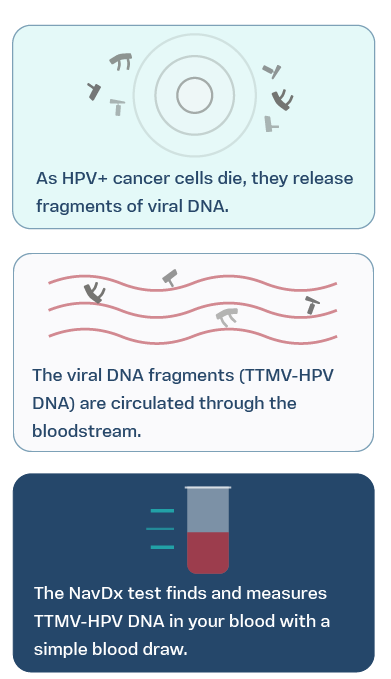
How does the NavDx test work?
Cancer cells release tiny fragments of their DNA into the bloodstream as a normal part of their lifecycle. These fragments, called circulating tumor DNA (ctDNA), can be detected in a blood sample. The NavDx test is designed to measure a very particular type of ctDNA called tumor tissue modified viral HPV DNA (TTMV-HPV DNA).
TTMV-HPV DNA is a biomarker—a molecule that can be objectively measured in a laboratory test to provide important information about your cancer status. The NavDx test is highly sensitive and specifically engineered to find and measure TTMV-HPV DNA fragments in your blood.
The test is backed by strong clinical evidence with over 120,000 tests performed on nearly 40,000 patients…and counting.
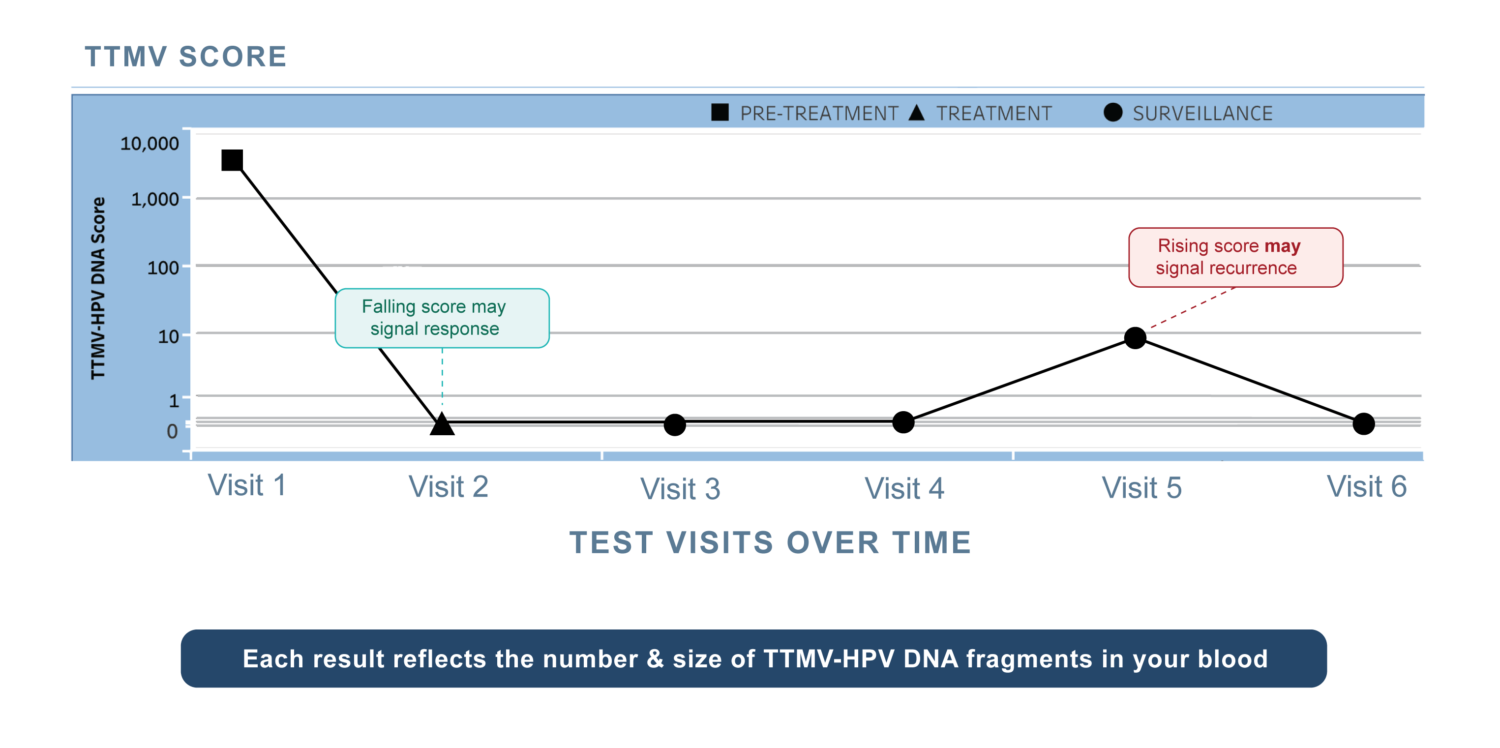
What is a TTMV Score?
A TTMV Score is the unique result generated by the NavDx test. It reflects the number and size of TTMV-HPV DNA fragments detected in your blood sample. Tracking changes in your TTMV Score over time gives your Provider meaningful information about your HPV+ cancer status.
Seeing Cancer Sooner.
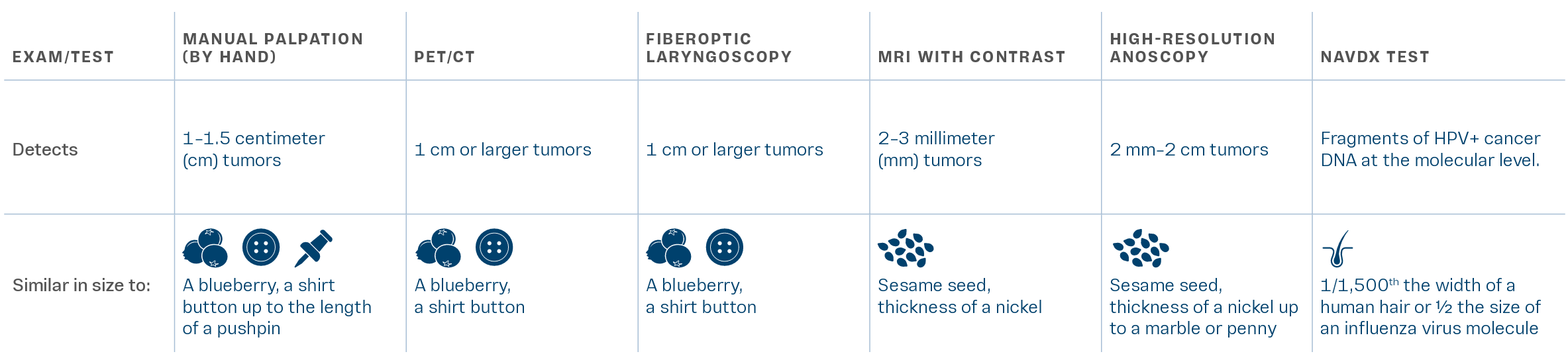
What makes the NavDx test different from standard surveillance methods, like physical exams and imaging, is what it can detect—and how small. While physical exams and imaging find tumors measured in centimeters or millimeters, the NavDx test looks for fragments of HPV+ cancer DNA in the blood, measured in base pairs. Wonder how big (or small) that actually is? Take a look at this comparison chart:
When is the NavDx Test Used and
What Can It Tell Me and My Provider?
The NavDx test can be used across the HPV+ cancer care journey.
Your Provider will determine which use, or combination of uses, is right for your specific situation.
Post-Treatment Surveillance: Earlier Detection When It Matters Most.
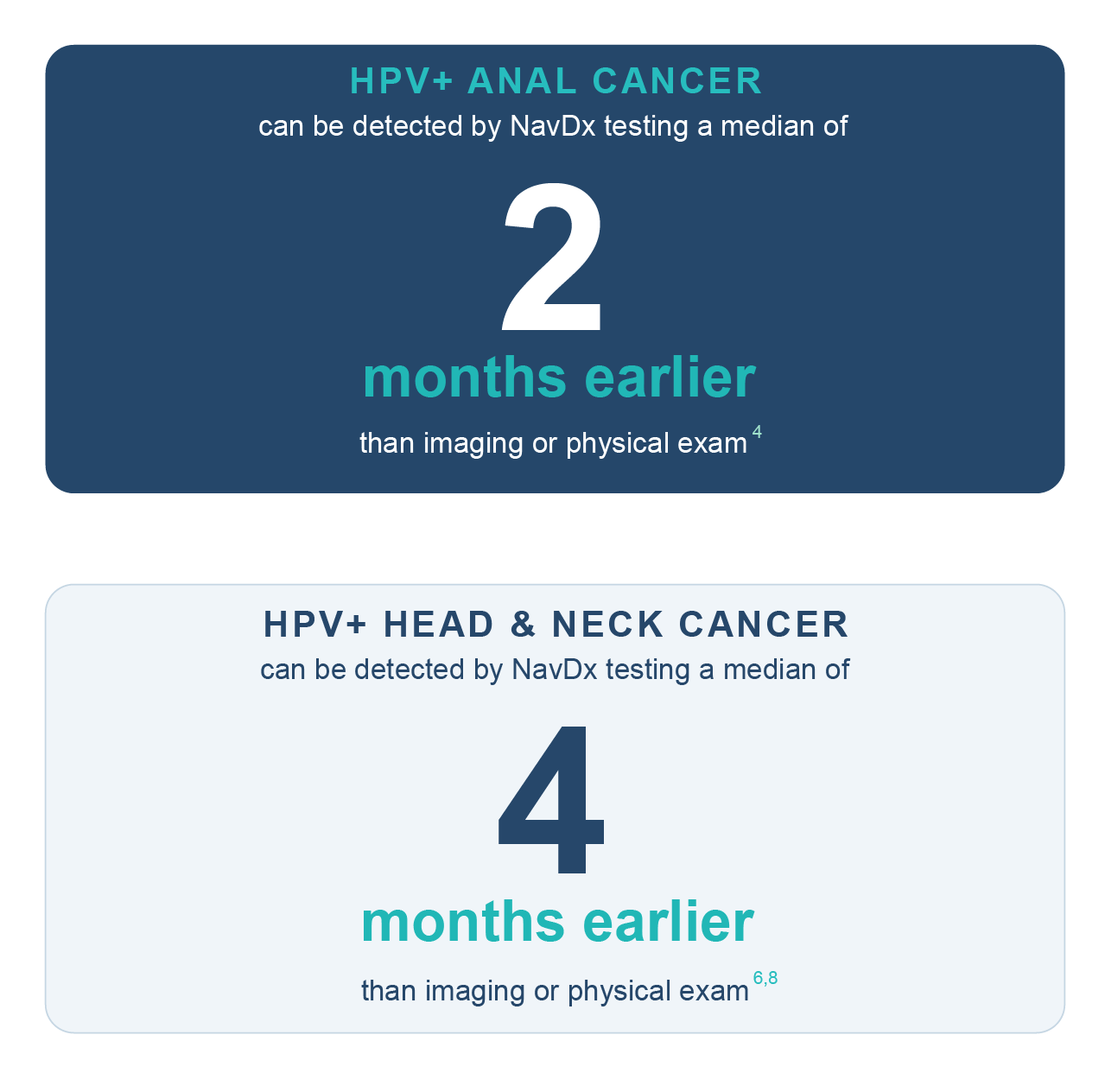
Post-treatment surveillance is the most common use of the NavDx test. Published studies show that routine NavDx testing can detect recurrence earlier than standard surveillance methods, such as physical exams, scopes, and imaging, which have critical limitations that can reduce their effectiveness. But the NavDx test detects cancer by finding fragments of its DNA in your blood, so it has the potential to find evidence of HPV+ cancer regardless of tumor size or where in your body it may be, even in patients with no symptoms whose clinical exams and imaging were clear.
Earlier detection matters because when recurrence is found sooner, the chance for successful treatment is greatest, more options may be available, and patients may be spared from more aggressive therapies. In some cases, targeted approaches, such as removing a small nodule or using limited directed radiation, may be possible in place of full chemoradiation.

Greater Assurance and Peace of Mind.
After completing cancer treatment, fear of recurrence is one of the most common concerns patients face. Studies show that up to 25% of HPV+ head & neck cancer patients and up to 30% of HPV+ anal cancer patients may experience a recurrence.
For many patients, the reassurance of a negative NavDx test result is just as valuable as catching recurrence early. Because NavDx testing is highly accurate, a negative result means a very strong likelihood that there was no detectable disease at the time of testing. That can also mean less worry between follow-up appointments.
A negative NavDx result can provide greater peace of mind, higher confidence in your health status, and less fear of recurrence, so you can focus on living your life.
Getting Started is Easy.
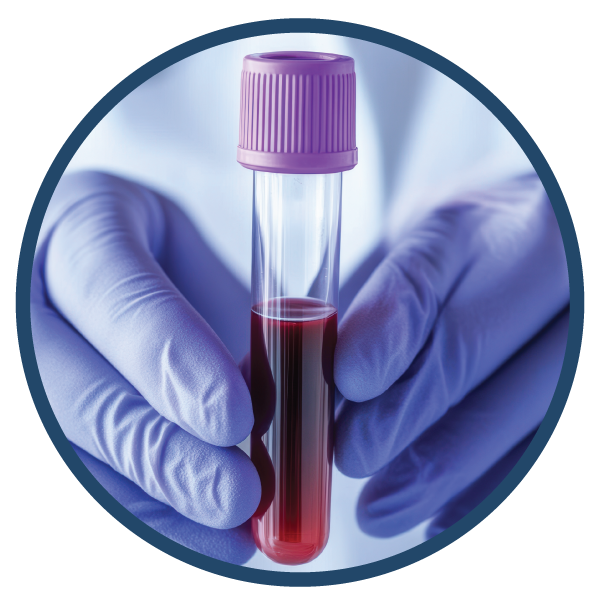
The NavDx test requires only a simple blood draw. No special preparation is needed. Your blood sample can be collected at your Provider’s office or care facility. You can also use NavDx-Arranged Phlebotomy to have your blood drawn at:
- A local walk-in clinic near you
- Your home, workplace, or other convenient location
With NavDx-Arranged Phlebotomy, the NavDx test is available everywhere blood can be drawn in the United States. We will even reach out as your next testing period approaches to help you stay on schedule.
Coverage and Financial Assistance.
NavDx testing is covered by a growing number of commercial insurance companies, as well as Medicare for specific indications. Financial assistance is available to those who qualify.
References
- Ferrandino RN, Chen S, Kappauf C, et al. Performance of liquid biopsy for diagnosis and surveillance of human papillomavirus–associated oropharyngeal cancer. JAMA Otolaryngol Head Neck Surg. 2023. http://doi.org/10.1001/jamaoto.2023.1937.
- Hanna GJ, Roof SA, Jabalee J, et al. Negative predictive value of circulating tumor tissue modified viral (TTMV)-HPV DNA for HPV-driven oropharyngeal cancer surveillance. Clin Cancer Res. 2023. http://doi.org/10.1158/1078-0432.CCR-23-1478.
- Berger BM, Hanna GJ, et al. Detection of occult recurrence using circulating tumor tissue modified viral HPV DNA among patients treated for HPV-driven oropharyngeal carcinoma. Clin Cancer Res. 2022. http://doi.org/10.1158/1078-0432.CCR-22-0562.
- Kabarriti R, Lloyd S, Jabalee J, et al. Evaluating tumor tissue modified viral (TTMV)-HPV DNA for the early detection of anal squamous cell carcinoma recurrence. Cancers. 2025. http://doi.org/10.3390/cancers17020174.
- Kabarriti R, Lloyd S, Jabalee J, et al. Resolving clinically indeterminate findings during anal cancer surveillance with TTMV-HPV DNA. Cancers. 2026. http://doi.org/10.3390/cancers18010035.
- Chera BS, Kumar S, Shen C, et al. Plasma circulating tumor HPV DNA for the surveillance of cancer recurrence in HPV-associated oropharyngeal cancer. J Clin Oncol. 2020. http://doi.org/10.1200/JCO.19.02444.
- Chera BS, Kumar S, Beaty BT, et al. Rapid clearance profile of plasma circulating tumor HPV type 16 DNA during chemoradiotherapy correlates with disease control in HPV-associated oropharyngeal cancer. Clin Cancer Res. 2019. https://doi.org/10.1158/1078-0432.CCR-19-0211.
- Rettig EM, Schoenfeld JD, Miller J, et al. A prospective trial of biomarker-guided surveillance for HPV-positive oropharynx cancer using plasma tumor tissue–modified viral HPV DNA. Clinical Cancer Research. 2025. http://doi.org/10.1158/1078-0432.CCR-24-3053.
- Mijares K, Ferrandino R, Chai R, et al. Circulating tumor HPV DNA in patients with head and neck carcinoma: Correlation with HPV genotyping. Am J Surg Pathol. 2024. http://doi.org/10.1097/PAS.0000000000002134.
- Naveris data on file.
- Ho AS, Moyers JT, et al. Evolving use of circulating tumor DNA for HPV+ oropharyngeal carcinoma: Consensus recommendations from the California Head and Neck Consortium. JCO Oncol Pract. 2025. http://doi.org/10.1200/OP-25-00450.
- Surveillance Research Program, National Cancer Institute. SEER*Explorer: An interactive website for SEER cancer statistics [Internet]. 2024.
- Kim JK, Tam M, et al. A phase 2 exploratory trial evaluating computed tomography-based midtreatment nodal response to select for de-escalated chemoradiation therapy in the definitive management of p16+ oropharyngeal cancer. Int J Radiat Oncol Biol Phys. 2026. http://doi.org/10.1016/j.ijrobp.2025.09.054.
- Ferrandino RM, Barlow J, Gold B, et al. Diagnostic accuracy of circulating tumor HPV DNA testing in patients with a lateral neck mass. JAMA Otolaryngol Head Neck Surg.2024. http://doi.org/10.1001/jamaoto.2024.2702.
- Papazian MR, Hicks MD, Mannion K, Turner M, and Topf MC. Diagnostic accuracy of HPV circulating tumor DNA following non-diagnostic FNA of a cystic lateral neck mass. Head Neck. 2026. http://doi.org/10.1002/hed.70060.
- Lambert T, Tasoulas J, Flores M, Sheth S, and Patel S. Circulating tumor HPV DNA as an alternative method to determine HPV status in oropharyngeal squamous cell carcinoma. Oral Oncol. 2023. http://doi.org/10.1016/j.oraloncology.2023.106361.
- Elaldi R, Roussel L-M, Gal J, et al. Correlations between long-term quality of life and patient needs and concerns following head and neck cancer treatment and the impact of psychological distress. A multicentric cross-sectional study. Eur Arch Otorhinolaryngol. 2021. http://doi.org/10.1007/s00405-020-06326-8.
- HPV infection. Mayo Clinic. Updated September 2025. https://www.mayoclinic.org/diseases-conditions/hpv-infection/symptoms-causes/syc-20351596.
- Chen Z, Schiffman M, Herrero R, et al. Classification and evolution of human papillomavirus genome variants: Alpha-5 (HPV26, 51, 69, 82), Alpha-6 (HPV30, 53, 56, 66), Alpha-11 (HPV34, 73), Alpha-13 (HPV54) and Alpha-3 (HPV61). Virology. 2018. http://doi.org/10.1016/j.virol.2018.01.002.
- Division of STD Prevention, CDC. Genital HPV infection fact sheet. https://www.cdc.gov/sti/about/about-genital-hpv-infection.html.
- Human papillomaviruses. IARC Monographs. 2012;100B:255-313.
- American Cancer Society. HPV and cancer. Updated March 2026. https://www.cancer.org/cancer/cancer-causes/infectious-agents/hpv/hpv-and-cancer-info.html.
- Martin, L. Oral HPV and cancer. WebMD. Updated February 2026. https://www.webmd.com/oral-health/guide/oral-hpv-cancer.
- American Cancer Society. Pap Test (Pap Smear). Updated December 2025. https://www.cancer.org/cancer/cervical-cancer/detection-diagnosis-staging/screening-tests/pap-test.html
- Chaturvedi AK, et al. Worldwide trends in incidence rates for oral cavity and oropharyngeal cancers. J Clin Oncol. 2013. http://doi.org/10.1200/JCO.2013.50.3870.
- Kostareli E, Holzinger D, and Hess J. New concepts for translational head and neck oncology: Lessons from HPV-related oropharyngeal squamous cell carcinomas. Front Oncol. 2012. http://doi.org/10.3389/fonc.2012.00036.
- Cancer Research UK. Changes in your appearance due to mouth and oropharyngeal cancer. Updated September 2024. https://www.cancerresearchuk.org/about-cancer/mouth-cancer/living-with/changes-your-appearance
- Fakhry C, Westra WH, Li S, et al. Improved survival of patients with human papillomavirus–positive head and neck squamous cell carcinoma in a prospective clinical trial. JNCI: Journal of the National Cancer Institute. 2008. https://doi.org/10.1093/jnci/djn011.
- Ang KK, Harris J, Wheeler R, et al. Human papillomavirus and survival of patients with oropharyngeal cancer. N Engl J Med. 2010. https://doi.org/10.1056/NEJMoa0912217.
- Gillison ML, Trotti AM, Harris J, et al. Radiotherapy plus cetuximab or cisplatin in human papillomavirus-positive oropharyngeal cancer (NRG Oncology RTOG 1016): a randomised, multicentre, non-inferiority trial. Lancet. 2019. https://doi.org/10.1016/S0140-6736(18)32779-X.
- Fakhry C et al. Human papillomavirus and overall survival after progression of oropharyngeal squamous cell carcinoma. J Clin Oncol. 2014. https://doi.org/10.1200/JCO.2014.55.1937
- Alemany L, Saunier M, Alvarado-Cabrero I, et al. Human papillomavirus DNA prevalence and type distribution in anal carcinomas worldwide. Int J Cancer. 2015. http://doi.org/10.1002/ijc.28963.
- Eng C, et al. The management and prevention of anal squamous cell carcinoma. Am Soc Clin Oncol Educ Book. 2019. http://doi.org/10.1200/EDBK_237433.
- Barnell GM, Schechter MS. Anal cancer screening and prevention—A new era, limited by access to high-resolution anoscopy. JAMA Netw Open. 2024. http://doi.org/10.1001/jamanetworkopen.2024.0019.
- Rim SH, Saraiya M, Beer L, Tie Y, Yuan X, Weiser J. Access to high-resolution anoscopy among persons with HIV and abnormal anal cytology results. JAMA Netw Open. 2024. http://doi.org/10.1001/jamanetworkopen.2024.0068.
- Rim SH, Beer L, Saraiya M, Tie Y, Yuan X, and Weiser J. Prevalence of anal cytology screening among persons with HIV and lack of access to high-resolution anoscopy at HIV care facilities. J Natl Cancer Inst. 2024. http://doi.org/10.1093/jnci/djae094.
- Ghodraty Jabloo V, Alibhai SMH, Fitch M, Tourangeau AE, Ayala AP, and Puts M. Antecedents and outcomes of uncertainty in older adults with cancer: A scoping review of the literature. Oncol Nurs Forum. 2017. http://doi.org/10.1188/17.ONF.E152-E167.
- Bergerot CD, et al. Fear of cancer recurrence or progression: What is it and what can we do about it? Am Soc Clin Oncol Educ Book. 2022. http://doi.org/10.1200/EDBK_100031.
- Roof SA, Jabalee J, Rettig EM, Chennareddy S, Ferrandino RM, Chen S, Posner MR, Genden EM, Chai RL, Sims J, Thrash E, Stern SJ, Kalman NS, Yarlagadda S, Raben A, Clements L, Mendelsohn A, Kaczmar JM, Pandey Y, Bhayani M, Del Vecchio Fitz C, Hanna GJ. Utility of TTMV-HPV DNA in resolving indeterminate findings during oropharyngeal cancer surveillance. Oral Oncol. 2024. http://doi.org/10.1016/j.oraloncology.2024.106874.
- Hollander A, Nonaka T. Cell-free HPV-DNA as a high-accuracy biomarker for treatment de-escalation in HPV-positive head and neck squamous cell carcinoma. Front Oncol. 2025. http://doi.org/10.3389/fonc.2025.1569877.
- Bastien AJ, Ng J, Cong I, Garcia J, Walgama ES, Luu M, Jang JK, Mita AC, Scher KS, Moyers JT, Mallen-St. Clair J, Maghami E, Chen MM, Zumsteg ZS, and Ho AS. Patient perceptions underlying ctDNA molecular surveillance for HPV(+) oropharyngeal squamous cell carcinoma. Oral Oncol. 2024. https://doi.org/10.1016/j.oraloncology.2024.106894.
- Lin MG, Zhu A, Read PW, Garneau J, and McLaughlin C. Novel HPV associated oropharyngeal squamous cell carcinoma surveillance DNA assay cost analysis. Laryngoscope. 2023. http://doi.org/10.1002/lary.30701.
- Gupta T, Master Z, Kannan S. et al. Diagnostic performance of post-treatment FDG PET or FDG PET/CT imaging in head and neck cancer: A systematic review and meta-analysis. Eur J Nucl Med Mol Imaging. 2011. http://doi.org/10.1007/s00259-011-1893-y.
- Lang Kuhs KA, Brenner JC, Holsinger FC, and Rettig EM. Circulating tumor HPV DNA for surveillance of HPV-positive oropharyngeal squamous cell carcinoma: A narrative review. JAMA Oncol. 2023. http://doi.org/10.1001/jamaoncol.2023.4042.
- Huffman BM, Singh H, Ali LR, Horick N, Wang SJ, Hoffman MT, et al. Biomarkers of pembrolizumab efficacy in advanced anal squamous cell carcinoma: analysis of a phase II clinical trial and a cohort of long-term responders. Journal for ImmunoTherapy of Cancer. 2024. http://doi.org/10.1136/jitc-2023-008436.
- Kais A, Santiago SP, Han PC, Clump DA, Stokes WA, Fancy T, Cui R, Martin E and Turner MT. Human papillomavirus circulating tumor DNA: a diagnostic tool in squamous cell carcinoma of unknown primary-a pilot study. Front Oncol. 2024. http://doi.org/10.3389/fonc.2024.1376595.
- Rettig EM, Wang AA, Tran N, et al. Association of pretreatment circulating tumor tissue-modified viral HPV DNA with clinicopathologic factors in HPV-positive oropharyngeal cancer. JAMA Otolaryngol Head Neck Surg. 2022. Article: http://doi.org/10.1001/jamaoto.2022.3282. Erratum: http://doi.org/10.1001/jamaoto.2022.4289.
- Ellsworth G, Shen R, Marcelin K-A, Majumdar R, Bazil M, Moore G, Nelson M, Alland I, Sepulveda G, Wilkin T, and Higginson D. High specificity of HPV cell-free DNA tests in persons with HIV for the detection of HPV-related cancer. J Acquir Immune Defic Syndr. 2023. http://doi.org/10.1097/QAI.0000000000003231.
- Routman DM, Kumar S, Chera BS, Jethwa KR, Van Abel KM, Frechette K, DeWees T, Golafshar M, Garcia JJ, Price DL, Kasperbauer JL, Patel SH, Neben-Wittich MA, Laack NL, Chintakuntlawar AV, Price KA, Liu MC, Foote RL, Moore EJ, Gupta GP, and Ma DJ. Detectable postoperative circulating tumor human papillomavirus DNA and association with recurrence in patients with HPV-associated oropharyngeal squamous cell carcinoma. Int J Radiat Oncol Biol Phys. 2022. http://doi.org/10.1016/j.ijrobp.2022.02.012.
- Huttinger ZM, Gogineni E, Baliga S, Blakaj DM, Bhateja P, Bonomi M, Kang SY, Old MO, Seim NB, VanKoevering KK, Agrawal A, Ozer E, Rocco JW, and Haring CT. Circulating tumor DNA determines induction chemotherapy response in HPV associated oropharyngeal squamous cell carcinoma: A pilot study. Oral Oncol. 2025. http://doi.org/10.1016/j.oraloncology.2025.107179.
- Frazer ML, Yang G, Felder S, McDonald J, Sanchez J, Dessureault S, Imanirad I, Carballido E, Kim R, Hoffe S, and Frakes J. Determining optimal follow-up for patients with anal cancer following chemoradiation. Am J Clin Oncol. 2020. http://doi.org/10.1097/COC.0000000000000673.
- Chung CH, Li J, Steuer CE, Bhateja P, Johnson M, Masannat J, Poole MI, Song F, Hernandez-Prera JC, Molina H, Wenig BM, Kumar S, Kuperwasser C, Stephens PJ, Farinhas JM, Shin DM, Kish JA, Muzaffar J, Kirtane K, Rocco JW, Schell MJ, Saba NF, and Bonomi M. Phase II multi-institutional clinical trial result of concurrent cetuximab and nivolumab in recurrent and/or metastatic head and neck squamous cell carcinoma. Clin Cancer Res. 2022. http://doi.org/10.1158/1078-0432.CCR-21-3849.
- Cabel L, Jeannot E, Bieche I, Vacher S, Callens C, Bazire L, Morel A, Bernard-Tessier A, Chemlali W, Schnitzler A, Lièvre A, Otz J, Minsat M, Vincent-Salomon A, Pierga J-Y, Buecher B, Mariani P, Proudhon C, Bidard F-C, and Cacheux W. Prognostic impact of residual HPV ctDNA detection after chemoradiotherapy for anal squamous cell carcinoma. Clin Cancer Res. 2018. http://doi.org/10.1158/1078-0432.CCR-18-0922.
- Bernard-Tessier A, Jeannot E, Guenat D, Debernardi A, Michel M, Proudhon C, Vincent-Salomon A, Bièche I, Pierga J-Y, Buecher B, Meurisse A, François E, Cohen R, Jary M, Vendrely V, Samalin E, El Hajbi F, Baba-Hamed N, Borg C, Bidard F-C, and Kim S. Clinical validity of HPV circulating tumor DNA in advanced anal carcinoma: An ancillary study to the epitopes-HPV02 trial. Clin Cancer Res. 2019. http://doi.org/10.1158/1078-0432.CCR-18-2984.
- Wong ET, Dmytriw AA, Yu E, et al. 18F-FDG PET/CT for locoregional surveillance following definitive treatment of head and neck cancer: A meta-analysis of reported studies. Head & Neck. 2019. https://doi.org/10.1002/hed.25513
- Masroor F, Corpman D, Carpenter DM, Ritterman Weintraub M, Cheung KHN, and Wang KH. Association of NCCN-recommended posttreatment surveillance with outcomes in patients with HPV-associated oropharyngeal squamous cell carcinoma. JAMA Otolaryngol. Neck Surg. 2019. https://doi.org/10.1001/jamaoto.2019.1934.
- Su W, Rajeev-Kumar G, Kang M, et al. Long-term outcomes in patients with recurrent human papillomavirus-positive oropharyngeal cancer after upfront transoral robotic surgery. Head & Neck. 2020. https://doi.org/10.1002/hed.26396
- Gimenez F, Costa-e-Silva IT, Daumas A, Araújo, Jd, Medeiros SG, and Ferreira, L. The value of high-resolution anoscopy in the diagnosis of anal cancer precursor lesions in HIV-positive patients. Arq. Gastroenterol. 2011. https://doi.org/10.1590/S0004-28032011000200010
- Brenes D, Kortum A, Carns J, Mutetwa T, Schwarz R, Liu Y, Sigel K, Richards-Kortum R, Anandasabapathy S, Gaisa M, and Chiao, E. Automated in vivo high-resolution imaging to detect human papillomavirus–associated anal precancer in persons living with HIV. Clinical and Translational Gastroenterology. 2023. http://doi.org/10.14309/ctg.0000000000000558
- Ang CW, Dawson R, Hall C, and Farmer M. The diagnostic value of digital rectal examination in primary care for palpable rectal tumour. Colorectal Disease. 2008. https://doi.org/10.1111/j.1463-1318.2007.01381.x
- Adusumilli P, Elsayed N, Theophanous S, Samuel R, Cooper R, Casanova N, Tolan DJ, Gilbert A, and Scarsbrook AF. Combined PET-CT and MRI for response evaluation in patients with squamous cell anal carcinoma treated with curative-intent chemoradiotherapy. Eur Radiol. 2022. http://doi.org/10.1007/s00330-022-08648-z.
- Eng C, Ciombor KK, Cho M, Dorth JA, Rajdev LN, Horowitz DP, Gollub MJ, Jácome AA, Lockney NA, Muldoon RL, Washington MK, O’Brian BA, Benny A, Lebeck Lee CM, Benson AB 3rd, Goodman KA, and Morris VK. Anal cancer: Emerging standards in a rare disease. Clin. Oncol. Off. J. Am. Soc. Clin. Oncol. 2022. http://doi.org/10.1200/JCO.21.02566.
- Littlejohn JB, and Brister KA. Management of Recurrent Anal Cancer. Oncol. Clin. 2025. https://pubmed.ncbi.nlm.nih.gov/39547772/
- Upadhyay L, Hartzell M, Parikh AR, Strickland MR, Klempner S, and Malla M. Recent advances in the management of anal cancer. Healthcare. 2023. https://doi.org/10.3390/healthcare11233010